
In a collision event, a vehicle’s safety features are crucial for passenger protection. These systems, ranging from traditional seat belts to advanced Artificial Intelligence (AI), work in concert to either help prevent accidents or provide an essential extra layer of defense when an impact occurs.
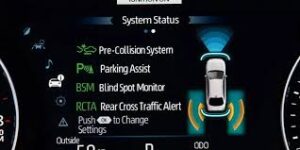
Here’s a list of car safety features that may protect passengers in the event of a collision:
What Are Car Safety Features?
Safety features are products or technological devices engineered to enhance vehicle safety. While they are not a substitute for defensive driving, these features have a massive impact on passenger protection during a collision. Many advanced features are offered by auto manufacturers, but only a few are currently mandated by law.
New Car Safety Features:
Thanks to continuous advancements and dedicated research in modern safety technology, manufacturers now offer a wide variety of sophisticated safety features on their latest models. Some of the most common features include:
- All-season tires: Engineered for year-round performance, featuring unique tread patterns and rubber compounds designed to enhance traction and grip on both wet and slippery roads. They are an ideal choice for varying or moderate weather conditions.
- Adaptive Lighting: Referring to a headlight system that dynamically responds to changes in traffic or surrounding conditions. When activated, these lights automatically adjust between low and high beams, significantly improving the driver’s visibility during nighttime and low-light operation.
- Lane Keeping Assist and Lane Centering Assist: Both use automatic steering and braking (per Consumer Reports) to keep the vehicle either within the lane or specifically in the center of the lane. Enhanced highway safety is often achieved when these features are paired with adaptive cruise control.
- Blind Spot Detection: Simplifies driving by actively monitoring blind spots. Sensors on the side mirrors and rear detect vehicles the driver cannot see, providing an immediate alert when another car is detected in the blind zone.
- Shatter-resistant glass: Significantly reduces the risk of the front and side windows breaking apart upon heavy impact. This laminated glass is engineered to help windshields remain intact and attached to the vehicle frame, a critical feature that helps protect passengers from serious injury.
- Lane Departure Warning (LDW): Is designed solely to alert drivers if they unintentionally drift across lane markings without activating a turn signal. It is important to note, however, that LDW systems do not take control of the vehicle to correct the lane deviation.
-
Automatic Emergency Braking (AEB): Automatically engages a vehicle’s brakes when a potential collision is detected. Utilizing this crucial feature can significantly improve driving safety and reduce the frequency of accidents. Depending on the vehicle make and model, AEB can encompass several specialized types, including:
-
Forward Collision Warning
-
Automatic Emergency Braking
-
Reverse Automatic Emergency Braking
-
Pedestrian Automatic Emergency Braking“
-
- Rear Cross-Traffic Alert system: Utilizes camera technology to detect and warn drivers about objects or vehicles approaching the rear of the vehicle that are outside the primary viewing area. This feature significantly enhances safety during maneuvers like backing out of perpendicular parking spaces or reversing onto busy streets.
- Automatic Crash Notification (ACN): is a vital safety technology designed to instantly notify emergency response teams the moment a collision occurs. The system’s operator can then track the vehicle’s location and gather critical information, which is essential if passengers are unresponsive.
- The Rearview Video System (or backup camera): is a safety feature that uses sensors to prevent rear-end collisions. As mandated by the U.S. Department of Transportation, the camera provides a real-time video view of a 10-foot by 20-foot zone directly behind the vehicle, protecting objects and people in the area.
Be advised that not all of these items are legally mandated, but their presence is growing significantly as technology evolves.

Mandatory Car Safety Features:
For the utmost protection of both drivers and passengers, the NHTSA (National Highway Traffic Safety Administration) mandates several standard safety features in all vehicles. If you are in the market for a new car, you should treat this list of required vehicle safety features as an essential starting point.
Seatbelts
- Seatbelts are a vital safety feature; NHTSA data confirms they save over 15,000 lives annually in the U.S. Designed to minimize collision injuries, a complete seatbelt system includes both a lap belt and a shoulder harness. They function by applying a restraining force during sudden stops or unexpected accelerations, effectively preventing heavy movement.
Airbags
- Airbags are essential for providing cushioning and support during a vehicle collision. These hidden safety devices, typically located in the front and sides of the vehicle, inflate instantly on impact to help prevent excessive occupant movement and manage impact forces. The life-saving impact of this technology is undeniable: NHTSA data shows frontal airbags saved 50,457 lives between 1987 and 2017.
- According to the IIHS (Insurance Institute for Highway Safety) Airbag Overview, frontal airbags have been standard equipment in all passenger car models since 1998, and in all SUVs, pickups, and vans since 1999. It is important to note, however, that side airbags are not currently mandated by law.
Tire Pressure Monitoring
- Tire Pressure Monitoring Systems (TPMS) are electronic devices that track a tire’s air pressure and alert the driver if it falls too low. The NHTSA has mandated TPMS on all models since the 2007 model year, meaning this feature is standard on all vehicles from 2008 onward. However, the government mandate does not require the system to specify which tire is low, so manual verification with a tire gauge remains an option.
Inside Trunk Monitor
- In 2001, the NHTSA instituted a requirement for all trunk-equipped vehicles to have an inside trunk handle. This crucial safety feature was engineered to ensure that any person trapped within a locked trunk—whether a child or an adult—could manually open the lid and escape. Owners interested in this feature on earlier models should check the car’s manual, as some pre-2001 vehicles may have included it.
Electronic Stability Control
- Since August 24, 2015, the NHTSA has mandated Electronic Stability Control (ESC) for heavy vehicles. ESC systems utilize selective, automatic emergency braking to individual wheels, helping to prevent loss of control when a vehicle swerves too quickly or deviates from its intended path. It is crucial to remember that ESC is an emergency aid and is not a replacement for defensive driving strategies.
If Safety Features Don’t Keep You Safe:
While safety features are crucial, collisions can still occur. If that happens, ensuring your vehicle—and all its safety features—are restored to their proper, functioning condition is vital for preventing future issues. The xperts at Auto Body Xperts have over 75 years of car frame and body repair experience. Every one of our 5 locations is staffed with professional technicians who deliver xpert advice, assistance with insurance paperwork, repair updates, and quality auto collision repair backed by our Lifetime Written Warranty.
Call us to schedule your appointment Today – (888)-669-6692